
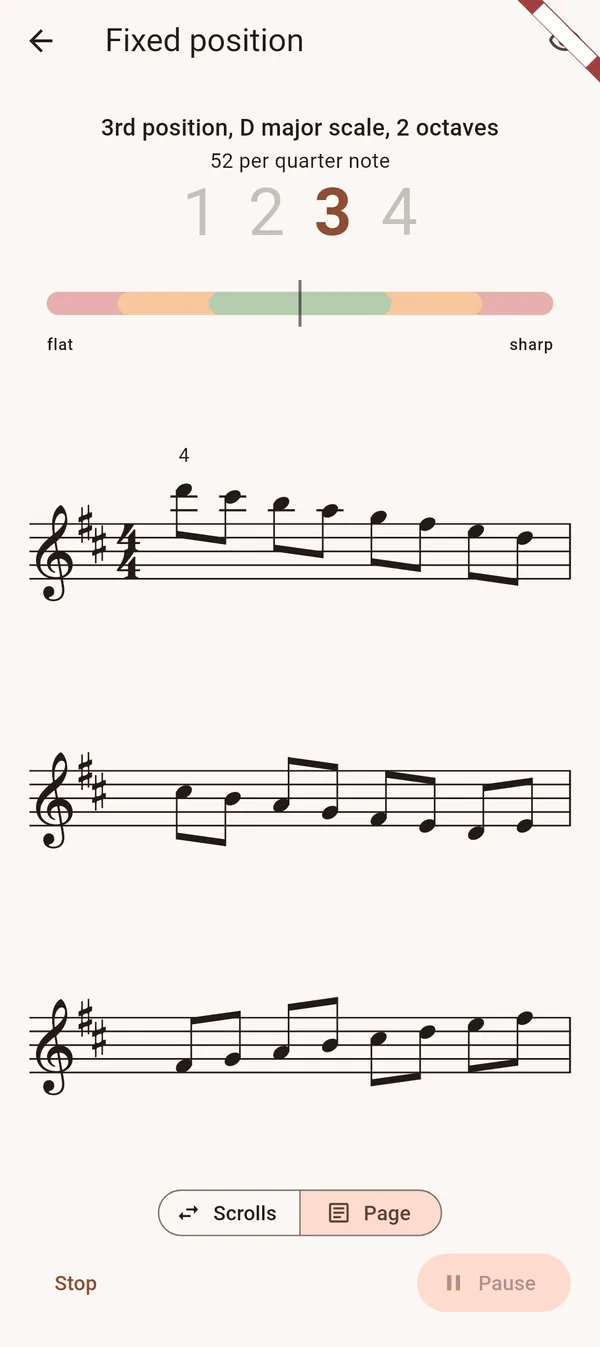
A scale programme in order
- Beginner: major scales, in the keys your finger patterns allow
- Intermediate: arpeggios and minor scales
- Advanced: scales with shifts, chromatic scales, three octaves
- Scales on one string, and in thirds and sixths in the double stops programme
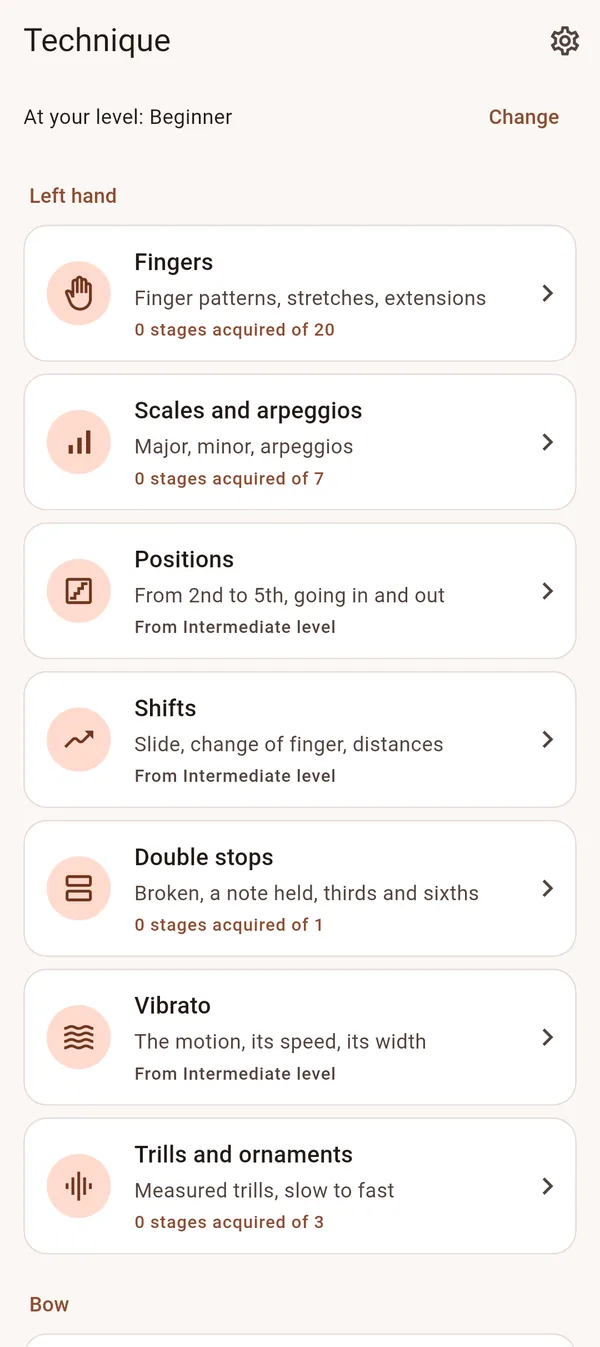
A different series each time
Each series changes: the key, the starting string, the rhythm, the bowing. A scale is acquired once three different series of it are good at your level's tempo, with the tempo climbing series after series.
Exam scales
Scales are part of every graded exam. Avilo's levels follow the same progression from one octave in first position to three octaves with shifts, so the work of each day prepares the scales of the exam.
Questions
How should I practise violin scales?
Slowly, with a metronome, listening to each note against the open strings, then faster once every degree is in tune. Change the rhythm and the bowing to stay attentive.
How many violin scales are there?
Twelve major and twelve minor keys, each over one, two or three octaves, plus arpeggios, chromatic scales and scales in double stops. Avilo brings them in the order they are learnt.